
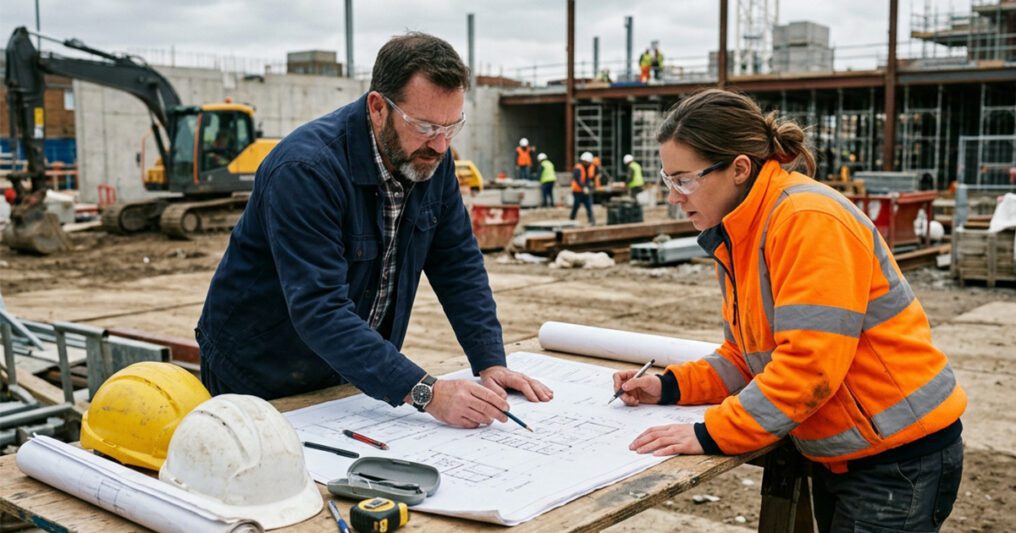
The $2.2 Million Problem Hidden Inside Every Major Construction Contract
According to the Arcadis Global Construction Disputes Report, the average value of a construction dispute globally reached $54.3 million in 2022, with U.S. domestic commercial disputes averaging $2.2 million in total costs — including legal fees, expert witnesses, project delays, and opportunity costs. More significantly, the report found that 47% of construction projects that enter litigation experience additional project delays during the legal process itself — meaning the project suffers twice.
Commercial real estate and construction are industries where disputes are not exceptional events. They are structural features of how complex projects work. Scope changes, subcontractor failures, permitting delays, material cost escalations, payment disputes, and force majeure claims are embedded in the business model. The question is not whether disputes will arise — it is how efficiently and privately they will be resolved.
Mediation, not litigation, is the answer that the data consistently supports.
Why Construction and Real Estate Disputes Are Uniquely Suited to Mediation
Construction and commercial real estate disputes share three characteristics that make them particularly well-served by mediation rather than litigation:
1. Ongoing Relationships Require Preservation
Commercial real estate developers work with the same general contractors, subcontractors, architects, and lenders across multiple projects. A $400,000 payment dispute resolved through a $300,000 lawsuit — which permanently poisons a $10 million ongoing relationship — is not a win. Mediation resolves the specific dispute without destroying the business relationships that generated the contract in the first place.
2. Technical Complexity Exceeds What Courts Handle Well
Construction disputes frequently involve engineering standards, building codes, soil composition reports, schedule impact analyses, and earned value calculations that general civil courts are not equipped to evaluate quickly or accurately. Mediation allows parties to present technical evidence to a mediator who can be briefed on the specifics — without waiting for a jury that has no construction background to be selected and educated from scratch.
3. Speed Is a Financial Variable, Not Just a Preference

When a construction project is halted because two parties are in litigation, carrying costs — interest on construction loans, equipment leases, subcontractor standby time, and insurance premiums — accumulate daily. The JAMS dispute resolution organization reports that construction litigation averages 26 to 36 months from filing to resolution. At typical commercial construction loan rates, a 30-month litigation timeline on a $5 million project generates between $450,000 and $750,000 in additional carrying costs — before legal fees are counted. Alternative Law’s mediation process resolves most commercial construction disputes in 4 to 16 weeks.
Common Construction and Real Estate Disputes Alternative Law Mediates
- Payment disputes — mechanic’s liens, retainage conflicts, and subcontractor non-payment chains
- Scope of work disagreements — change order disputes, design deviation claims, and specification interpretation conflicts
- Schedule and delay claims — liquidated damages enforcement, force majeure applicability, and critical path disputes
- Defect and warranty claims — structural deficiency allegations, workmanship disputes, and material substitution conflicts
- Developer and investor disputes — equity contribution conflicts, return of capital disagreements, and project abandonment claims
- Commercial lease disputes — CAM charge disagreements, tenant improvement allowance conflicts, and lease termination claims
- Real estate partnership dissolution — disagreements over asset valuation, sale timing, and equity distribution in commercial property partnerships
The Confidentiality Advantage in Commercial Disputes
Construction litigation is public record. Dispute details — including project deficiencies, contractor performance failures, financial terms, and internal communications — become accessible to competitors, future clients, insurers, and lenders. In an industry where reputation directly drives contract awards, public litigation is a reputational liability that extends well beyond the specific case.
Alternative Law’s mediation process is fully confidential by written agreement. No session content, no documents exchanged in mediation, and no settlement terms become part of any public record. This confidentiality protection is particularly valuable for developers, contractors, and property owners managing ongoing business relationships in tight-knit regional markets.
How Alternative Law Approaches Commercial and Construction Mediation
Alternative Law’s “Best Ideas Win” methodology is specifically structured for the multi-party complexity of commercial construction disputes. Projects typically involve owners, general contractors, one or more subcontractors, design professionals, lenders, and insurers — each with distinct interests and distinct legal exposure.
- Comprehensive Conflict Mapping — Alternative Law mediators conduct individual pre-session meetings with each party to understand their factual positions, financial interests, legal concerns, and desired outcomes before any joint session occurs. This prevents joint sessions from becoming adversarial immediately.
- Technical Fact Development — Where disputes involve engineering or construction standards questions, Alternative Law coordinates with technical consultants to ensure mediators and parties are working from a shared factual foundation, reducing the “dueling experts” dynamic that makes construction litigation so expensive.
- Structured Settlement Design — Commercial construction settlements often require creative structures: phased payment schedules, warranty extensions, scope modifications, or insurance subrogation agreements. Alternative Law actively develops these structures rather than simply facilitating conversation and waiting for parties to find solutions independently.
The Cost Case Is Straightforward
Construction mediation through Alternative Law starts at $1,000. Cases of moderate complexity typically conclude for a fraction of the cost of a single month of construction litigation. When carrying costs, expert fees, attorney time, and project disruption are included in the calculation, the financial case for mediation over litigation in construction and commercial real estate is not close.
Alternative Law serves construction professionals, developers, property managers, and commercial real estate owners across all 50 states. Every engagement is backed by a 100% money-back guarantee. Call 1.800.529.1516 or schedule a free consultation at alternativelaw.com.
How long does construction dispute mediation typically take?
Alternative Law resolves most commercial construction disputes in 4 to 16 weeks, depending on the number of parties and complexity of the technical issues involved. This compares to construction litigation, which the JAMS organization reports averages 26 to 36 months from filing to resolution — during which project carrying costs continue to accumulate.
Can mediation handle multi-party construction disputes involving owners, contractors, and subcontractors simultaneously?
Yes. Alternative Law’s “Best Ideas Win” methodology is specifically designed for multi-party commercial disputes. Mediators conduct individual pre-session meetings with each party before any joint sessions occur, ensuring that the specific interests and concerns of each stakeholder — owner, general contractor, subcontractors, design professionals, lenders — are fully understood before group negotiation begins.
Is construction mediation confidential?
Yes. All Alternative Law mediation sessions are governed by signed confidentiality agreements before the first session. No session content, documents exchanged in mediation, or settlement terms become part of any public record. This is a significant advantage in commercial construction markets where project disputes, if publicized, can affect contractor reputations and future bidding relationships.
Can mediation resolve a construction dispute if litigation has already been filed?
Yes. Mediation can be initiated at any stage of a dispute — before litigation, after a claim is filed, and even while active litigation is pending. Courts increasingly require parties to attempt mediation before proceeding to trial, and many commercial construction contracts include mandatory mediation clauses. Alternative Law works with parties and their counsel at any stage of the dispute lifecycle.
What types of commercial real estate disputes does Alternative Law mediate?
Alternative Law mediates commercial lease disputes, developer and investor conflicts, real estate partnership dissolutions, property management disagreements, foreclosure-related disputes, buyer-seller contract conflicts, CAM charge disagreements, and tenant improvement allowance conflicts. The firm serves both individual property owners and institutional real estate entities across all asset classes.